Building an AI-Powered LinkedIn Automation Platform

At Lundy, we believe the best way to grow as an engineer is simple: build real products.
Not just tutorials.
Not just exercises.
But real tools, used by real people.
That philosophy is exactly what inspired #TheStartupExperience, an internal initiative where our engineers collaborate in small teams to design, build, and launch a product from scratch.
One of the most impressive outcomes of this initiative was LinkWrite — an AI-powered Chrome extension designed to help creators write better content on LinkedIn.
And the team behind it didn’t just build a prototype.
They built a working product.
What is LinkWrite?
LinkWrite is a browser extension combined with an AI-powered copywriting engine designed to help professionals create high-quality LinkedIn posts faster.
Instead of staring at a blank screen, users can generate ideas, refine their messaging, and structure posts directly inside the LinkedIn editor.
The goal was simple:
Help creators publish content faster — and smarter.
The extension integrates directly into the LinkedIn writing flow, giving users access to AI-assisted writing suggestions while they draft their posts.
The Challenge: Build a Product Like a Startup
The project was led by Alejandro, one of our engineers, who took full ownership of the initiative.
But this wasn’t just a coding exercise.
The team treated the project like a real startup.
They defined the product vision, designed the architecture, divided responsibilities, and maintained regular development cycles.
“We treated it like a real product. Regular meetings, updates, documentation… everything. It was the most fun I’ve had building in a long time.”
From the very beginning, the goal was to simulate what building a real SaaS product looks like.
That meant working across multiple areas:
- Product ideation
- Technical architecture
- Backend development
- Browser extension development
- AI integration
- Team coordination
- Public presentation
The personalised advice I found here is the best thing ever. I’m incredibly grateful.

Building the LinkWrite Chrome Extension
The first challenge was designing a browser plugin that could seamlessly integrate into LinkedIn's interface.
The team built a Chrome extension capable of interacting with the LinkedIn post editor, allowing users to generate content suggestions without leaving the platform.
The extension acts as the user interface layer, enabling writers to:
- Generate LinkedIn post ideas
- Improve existing drafts
- Structure posts for clarity and engagement
- Iterate quickly on different versions
All of this happens directly inside the browser.
This approach made the tool feel natural and frictionless for creators.
The AI Engine Behind the Tool
At the core of LinkWrite is an AI-powered content generation system that helps users transform rough ideas into polished LinkedIn posts.
The backend processes prompts from the extension and generates suggestions tailored for professional content.
The team focused on building a system that could:
- Maintain a professional tone
- Produce structured LinkedIn-style posts
- Help users move from idea → draft → publish quickly
Rather than replacing the creator’s voice, the goal was to augment it.
AI became a collaborator in the writing process.
Designing the Architecture
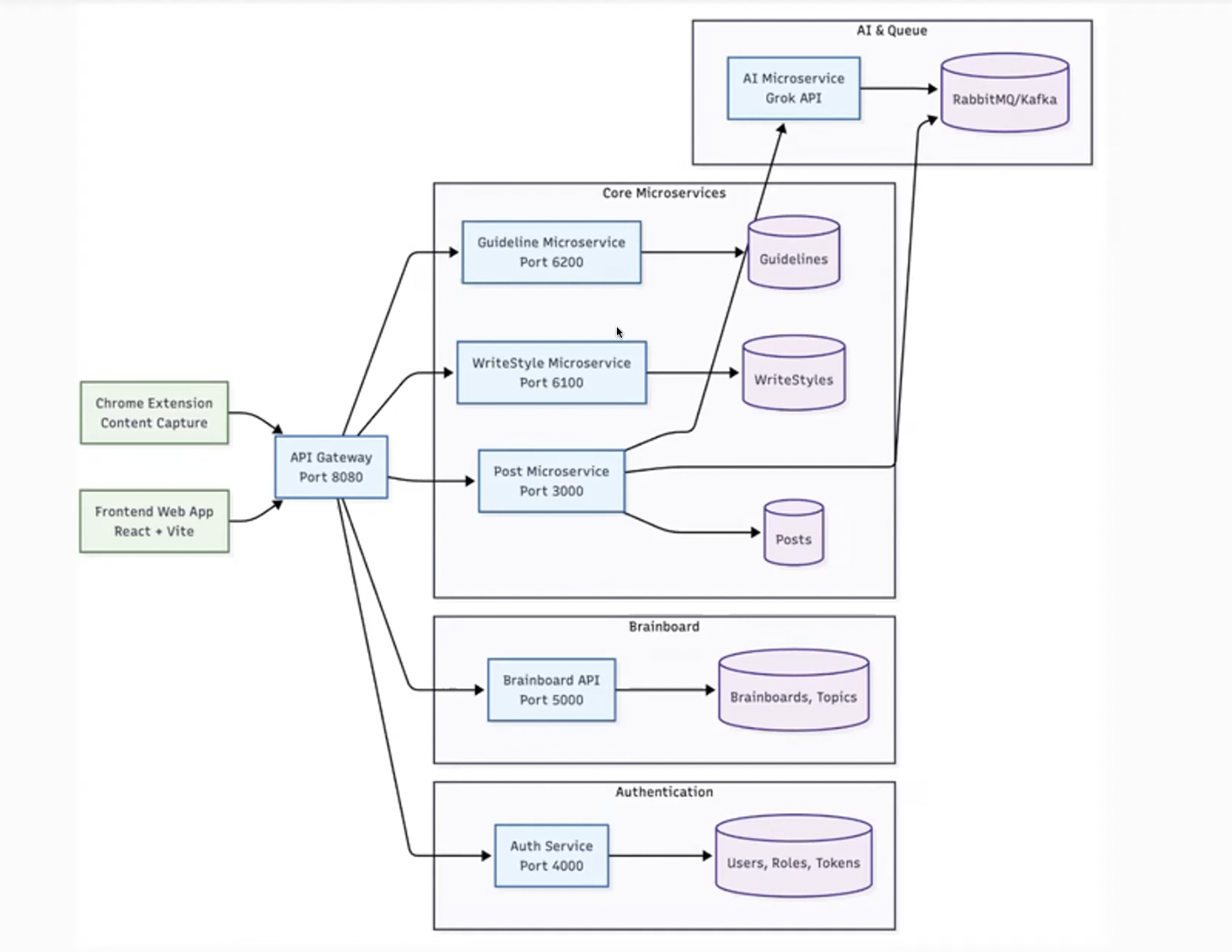
From a technical perspective, LinkWrite required a multi-layer architecture.
The system included:
- A Chrome extension acting as the client interface
- A backend service handling requests from the extension
- An AI processing layer responsible for generating content suggestions
- APIs connecting the different components
The team documented the architecture carefully, treating the project as if it were going to production.
This meant writing proper documentation, defining system flows, and ensuring the project could scale beyond a simple prototype.
A Real Team, Not Just a Project
Alejandro didn’t build LinkWrite alone.
The project was developed in collaboration with Rafael and Diego, who worked together across different areas of the stack.
Beyond the technical work, the team also presented the project publicly in English — explaining both the product vision and technical architecture.
This kind of communication is a critical skill for engineers working in international environments.
Winning #TheStartupExperience
After weeks of development, the team presented their product as part of the #TheStartupExperience initiative.
The result?
Their project won the initiative, standing out among multiple teams.
More importantly, the product impressed external stakeholders who reviewed the project and its technical execution.
The combination of:
- Product thinking
- Technical architecture
- Team coordination
- Clear presentation
made LinkWrite one of the strongest projects produced during the program.
Why Projects Like This Matter
For many developers, the biggest gap in their career isn’t knowledge.
It’s experience building real systems.
That’s why initiatives like #TheStartupExperience matter so much.
Instead of focusing only on theory, our engineers:
- Work in teams
- Build real products
- Solve real problems
- Present their work publicly
This kind of environment prepares engineers for the kind of work they’ll do in startups, scaleups, and international tech companies.
Building the Next Generation of Engineers
LinkWrite is just one example of what happens when engineers are given the opportunity to build, experiment, and lead projects.
The project showed how technical skills, product thinking, and teamwork come together to create something meaningful.
And for Alejandro and his team, it was more than just a project.
It was an experience that mirrors what building a startup actually feels like.
Results that speak for themselves
Weeks: From idea to working AI-powered Chrome extension
Engineers: Cross-functional team building the full product
Product: Chrome extension + AI backend deployed and demoed


