Building a Personal Finance App with AI & Claude Code
There’s something very different about building software under pressure.
Not tutorial projects.
Not toy apps.
Not “yet another CRUD application”.
I’m talking about building a real product with real architecture, real collaboration, and real engineering decisions — while balancing full-time jobs, different time zones, and ambitious goals.
That’s exactly what happened during our latest edition of #TheStartupExperience at our engineering community in Lundy.
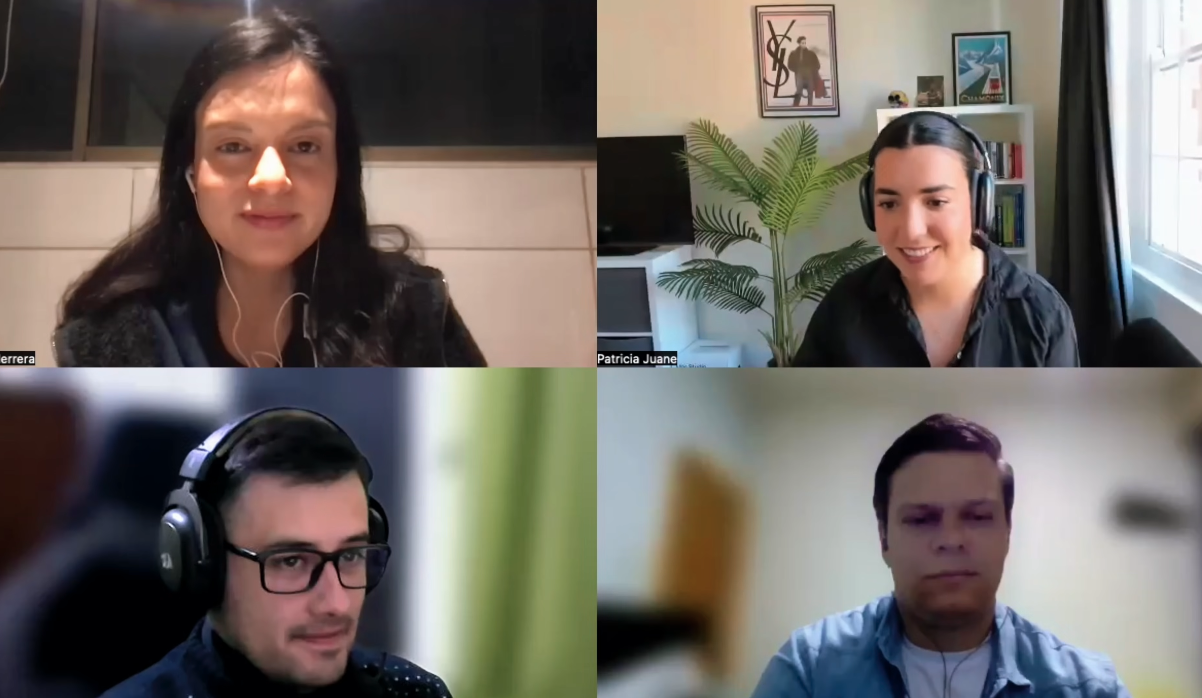
This time, three software engineers - Berenice, Facu, and Neil - came together to build FlowMint, an AI-powered personal finance platform designed to help users stop looking at their finances retrospectively… and start planning their future proactively.
And honestly?
What they built felt far beyond a traditional MVP.
The Problem They Wanted to Solve
Most finance apps tell you where your money went.
But by the time you analyse the data…
the money is already gone.
The team realised there was a gap in the market:
What if a finance app could help users make future-oriented financial decisions instead?
That’s where the idea for FlowMint was born.
The platform allows users to:
- Track income and expenses
- Create actionable financial projections
- Simulate long-term wealth growth
- Forecast financial freedom timelines
- Allocate money intentionally using predefined rules
- Use AI to simplify repetitive financial tracking
One particularly interesting feature was the AI-powered transaction registration flow.
Instead of manually categorising expenses every time, users could simply type a sentence naturally, and the system would infer:
- the amount
- the expense category
- where it should be registered
A very modern approach aligned with how AI products are evolving today.
Building Like a Real Engineering Team
One of the things that impressed me the most during the project was how professionally the team operated from day one.
This wasn’t:
- “everyone coding randomly”
- unclear ownership
- or chaotic execution
Instead, they approached the project like a real startup engineering team.
Facu took the role of Technical Lead and focused heavily on scalability and system design from the beginning.
The team organised the project using:
- Trello sprints
- acceptance criteria
- architectural documentation
- Miro system design boards
- GitHub organisation workflows
- pull requests and detailed documentation
And perhaps most importantly:
They designed the platform using Hexagonal Architecture.
Not because it was trendy.
But because they wanted the product to remain maintainable and scalable as future AI features got integrated into the platform.
My experience with Lundy has been a journey of continuous growth. The program gave me the momentum I needed to secure a strong offer.

Thinking Beyond Code: User Journeys First
Another very senior aspect of the project was how they approached product thinking.
Before writing code, the team mapped out a fictional user journey.
They created a user persona called “Luisa” and imagined:
- her financial habits
- daily behaviours
- emotional pain points
- spending decisions
This helped them define:
- what mattered most
- what the product should optimise for
- and how the UX should feel
Instead of building features first…
they built context first.
That’s exactly how strong product teams operate in real companies.
The Tech Stack
The frontend was built with:
- React
- TypeScript
- Storybook
- Atomic Design principles
Bereniche focused heavily on component reusability and scalable frontend architecture, applying patterns she had previously used in production environments.
The backend initially started with:
- Python
- FastAPI
- Hexagonal Architecture
- highly structured adapters and interfaces
Nil focused deeply on backend structure, documentation, and maintainability.
The team also used:
- Supabase for the database
- Netlify for deployment
- GitHub workflows for collaboration
The Biggest Technical Challenge
A few days before the final demo…
the team realised they weren’t going to make it in time with the original backend implementation.
And this is where things got really interesting.
Instead of panicking, they leveraged:
- their architecture
- documentation
- AI-assisted development workflows
- and strong engineering foundations
to migrate the backend rapidly.
Bereniche used Claude Code and AI-assisted coding techniques to accelerate development while maintaining architectural consistency.
What stood out to me was not just the use of AI itself.
It was how they used it.
They treated AI like:
- a junior engineer
- a productivity accelerator
- not a replacement for engineering judgment
That distinction matters massively in today’s AI era.
Why This Project Was Different
During the final presentations, one thing became obvious immediately:
FlowMint didn’t look like a rushed MVP.
The architecture was extremely senior.
The frontend felt polished.
The system design decisions were intentional.
The collaboration was professional.
And most importantly:
the team genuinely learned how modern software teams operate.
Not theoretically.
Practically.
The Real Outcome Wasn’t Just the Product
What I personally loved most about this interview was hearing how the experience transformed the engineers themselves.
Nil explained that after the program ended, he immediately started reviving old side projects and deploying them properly using the same engineering principles he learned during the experience.
Facu wants to continue specialising in AI systems and scalable architectures.
Bereniche is focusing heavily on AI engineering and building her personal brand while continuing to explore agentic systems and RAG architectures.
And the team is already discussing how FlowMint could eventually reach real users and evolve into a market-ready product.
Final Thoughts
One of the biggest shifts happening in software engineering right now is this:
The best engineers are no longer just coders.
They are:
- product thinkers
- system designers
- collaborators
- AI-assisted builders
- communicators
- fast learners
This project reflected all of that.
And honestly, seeing engineers collaborate at this level inside DevAccelerator makes me incredibly excited about what’s coming next.
The future belongs to engineers who can build fast, think deeply, and adapt quickly.
This team proved exactly that.
Results that speak for themselves
Engineers
Months
Solution


