Building a Budgeting tool for travellers

We’ve all been there.
Dinner with friends.
A group trip.
Shared expenses.
And then… that moment:
👉 “Wait… who paid what?”
👉 “Can you send me how much I owe?”
👉 “I think I already paid you?”
Awkward. Time-consuming. Sometimes even relationship-breaking.
That’s the problem SplitFlow set out to solve.
But this story isn’t just about a budgeting app.
It’s about how modern engineers build products today.
💡 The Idea: Solve a Problem You’ve Lived
SplitFlow didn’t start with a “startup idea.”
It started with a real frustration:
“We had problems calculating who owed what after trips with friends.”
Instead of overthinking, the team focused on:
👉 Making expense tracking simple, automatic, and frictionless.
The goal wasn’t innovation for the sake of it.
It was removing friction from real life.
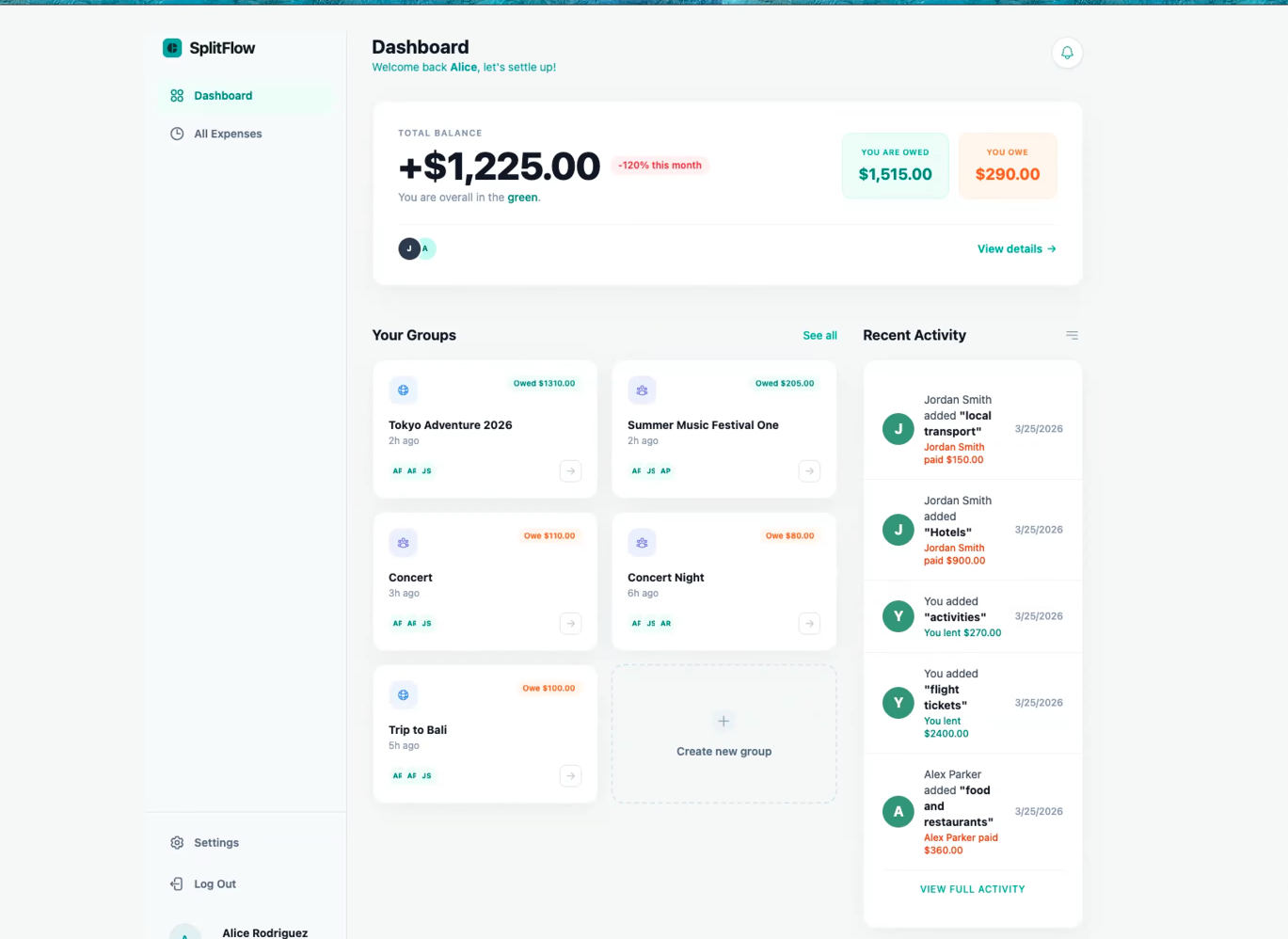
📱 The Product: SplitFlow
At its core, SplitFlow is simple:
- Create a group
- Add expenses
- Automatically calculate balances
- See who owes what — instantly
No awkward conversations.
No manual calculations.
No stress.
But here’s where it gets interesting:
👉 This problem already exists. Tools like Splitwise already solve it.
So why build another one?

🔥 The Real Differentiator: Execution > Idea
The team didn’t try to reinvent the wheel.
They improved it.
“Existing apps weren’t intuitive. Too many steps, too much friction.”
So they focused on:
- 🧼 Cleaner UI/UX
- ⚡ Faster interactions
- 📉 Reduced friction in adding expenses
- 🧠 Simpler mental model for users
This is a critical lesson:
👉 You don’t need a new idea. You need a better execution.
🏗️ How They Built It
Before writing code, they did something most engineers skip:
👉 They planned the product first.
- Defined core features
- Prioritized MVP scope
- Designed UI before coding
- Split work into frontend/backend
Tech stack:
- Frontend: React + TypeScript
- Backend: Node.js
- Database & Auth: Supabase
Why TypeScript?
👉 Because financial apps require precision and safety.
🤝 Working Across Time Zones Like a Real Team
The team was distributed across:
- 🇩🇪 Germany
- 🇵🇪 Peru
- 🇪🇨 Ecuador
And still:
- Weekly syncs
- Async communication
- Task tracking with Trello
- Code reviews via Pull Requests
“It was surprisingly smooth. Communication was open and easy.”
This is what modern engineering teams look like.
🤖 AI as a Co-Pilot (Not a Crutch)
AI played a key role:
- Helping structure components
- Assisting backend logic
- Speeding up development
But not blindly.
“AI doesn’t give you 100% correct results. You still need to validate everything.”
This is the shift:
👉 Engineers who win are those who guide AI, not depend on it blindly.
⚠️ The Hardest Parts
Surprisingly, the biggest challenges weren’t writing code.
They were:
1. Integrations
Connecting frontend and backend took more time than expected.
2. Financial Logic
Accurately calculating balances and splits is harder than it looks.
3. Communication Gaps
Even small misalignments led to duplicated work.
“One small miscommunication and we built the same thing twice.”
Real-world problems. Real-world lessons.
Final Thought
SplitFlow isn’t just about splitting expenses.
It’s about something bigger:
👉 Engineers taking control of their learning by building real products.
Because in 2026…
The best developers aren’t the ones who know the most.
They’re the ones who build the most.
Results that speak for themselves
Countries
Developers
Product


